

UAE leads world in air transport infrastructure as TTDI 2026 reveals tourism shifts
Middle East posts gains despite aviation disruption and conflict
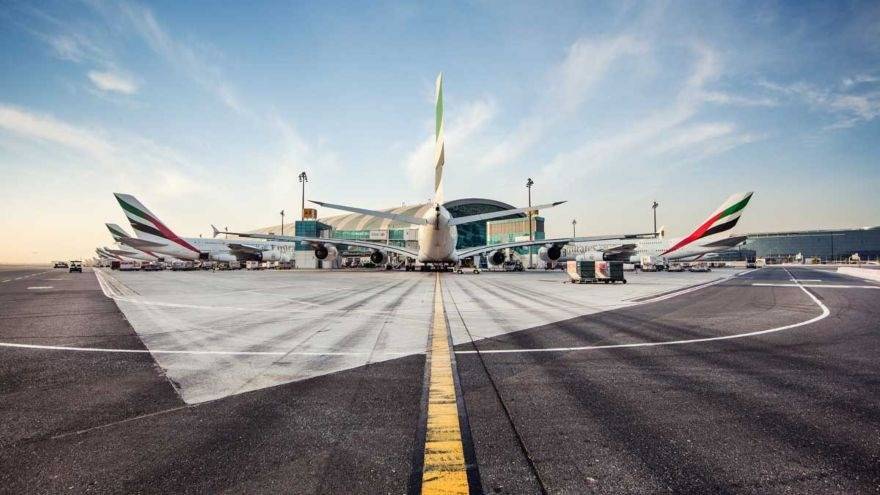
DUBAI – The United Arab Emirates (UAE) has emerged as the world’s top-ranked economy for air transport infrastructure in the 2026 Travel & Tourism Development Index (TTDI), highlighting the strength of its aviation network and connectivity.
The finding comes as the World Economic Forum’s 10th edition of the index shows tourism conditions improving across most economies despite geopolitical tensions, rising costs and pressure on infrastructure. The report was launched on Friday at Beyond Tourism Day and was developed in collaboration with Zurich Insurance Group.
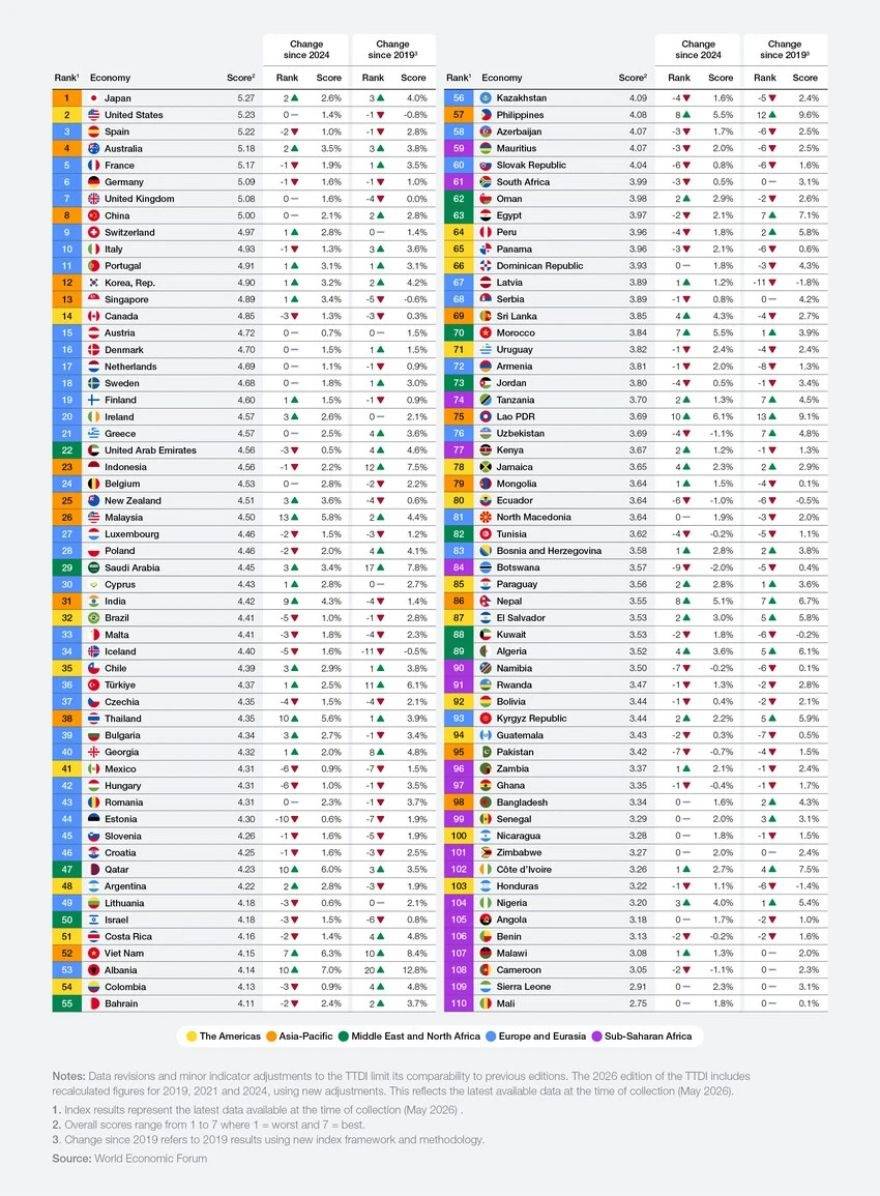
The UAE ranked 22nd overall among 110 economies, recording a TTDI score of 4.56. Its score increased by 4.6% compared with 2019, although its overall position was three places lower than in the 2024 edition. The latest ranking nevertheless places the country at the top of the global table for the Air Transport Infrastructure pillar.
Aviation strength
The UAE’s position comes against a backdrop of significant disruption to regional aviation in 2026. The WEF report said the conflict in the Middle East disrupted a critical aviation corridor connecting Europe, Asia, Australia and Africa, affecting flight schedules, fuel costs, airfares and traveller confidence.
Despite those pressures, the UAE retained its leading position in air transport infrastructure. The pillar itself improved by 7.2% globally between 2024 and 2026, with 92% of economies recording higher scores. The WEF noted that leadership in this area remains concentrated among established connectivity hubs.
The result builds on the UAE’s performance in the previous TTDI edition. In 2024, the country ranked 18th globally and first in the Middle East and North Africa, with a score of 4.62. It also ranked first globally for travel and tourism data provision and air transport infrastructure, while placing second for infrastructure and services.
Regional picture
The latest index shows that the wider MENA tourism sector continued to improve despite the disruption. The region’s average TTDI score rose by 2.5% between 2024 and 2026, making it one of the fastest-improving regions globally, although its average score of 3.98 remained below Europe and Eurasia at 4.39 and the Americas at 3.96.
MENA accounted for 10% of international tourist arrivals globally but represented 4.5% of travel and tourism industry GDP and 4.1% of employment, according to the regional breakdown. The figures underline the gap between visitor volumes and the economic value generated by tourism across the region.
Saudi Arabia recorded one of the region’s biggest advances, reaching 29th place, up 17 positions since 2019. Qatar climbed 10 places to 47th, while Morocco rose seven places to 70th. Bahrain ranked 55th, followed by Egypt at 63rd, Jordan at 73rd, Tunisia at 82nd, Kuwait at 88th and Algeria at 89th.
Global recovery
Across the 110 economies assessed, 101 improved their TTDI scores between 2024 and 2026, lifting the average by 2.1%. The WEF said this represented the fastest pace of improvement since 2019.
Japan took the top overall position, followed by the United States, Spain, Australia and France. Advanced economies occupied nine of the top 10 positions, while China was the only emerging or developing economy in that group.
The index also recorded a major expansion in global tourism activity. International tourist arrivals reached a record 1.5 billion in 2025, while travel and tourism contributed $11.6 trillion to the global economy and supported 366 million jobs.
Rising pressure
The improvement in tourism development conditions has come alongside mounting challenges for destinations. The TTDI found that travel became less affordable in three out of four economies between 2024 and 2026, while tourism investment failed to keep pace with rising demand.
Labour shortages are also emerging as a major constraint, particularly as destinations seek to expand capacity while maintaining service standards. The WEF further found that stronger visitor numbers do not automatically translate into greater benefits for local communities.
For the UAE, the latest ranking comes as the country continues to expand its tourism and transport infrastructure. UAE tourism recorded more than 32 million hotel guests in 2025, up 5.1% from 2024, while hotel revenues reached Dh49.21 billion, an annual increase of 9.7%.
The country is also pursuing closer integration between different transport modes. Etihad Airways and Etihad Rail signed an agreement in September to explore integrated air and rail travel, including potential connections between Zayed International Airport and the national railway network, as part of efforts to strengthen visitor mobility across the UAE.